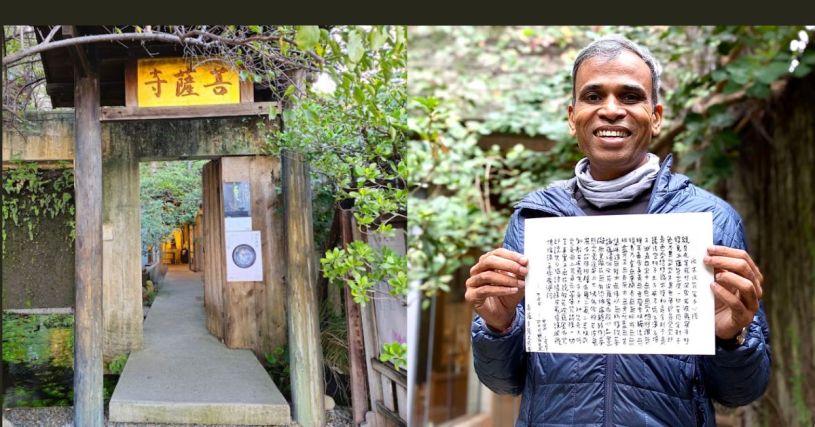
How do you connect with something you cannot understand, something totally unfamiliar and foreign? That question stirred within me as I sat before the Heart Sutra, written in Traditional Chinese. What began as a challenge to replicate unfamiliar symbols transformed into a sacred dialogue with humanity, etched one deliberate stroke at a time.

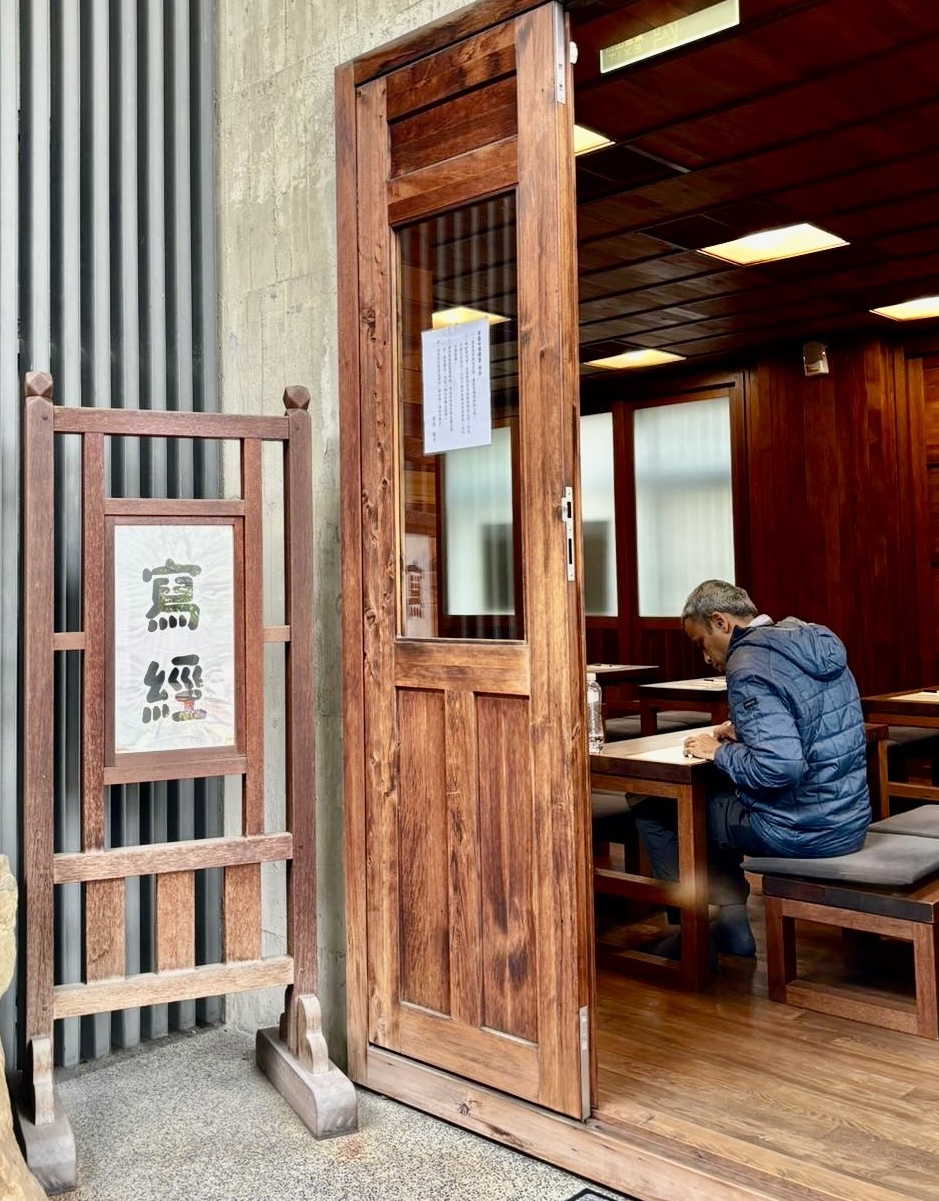
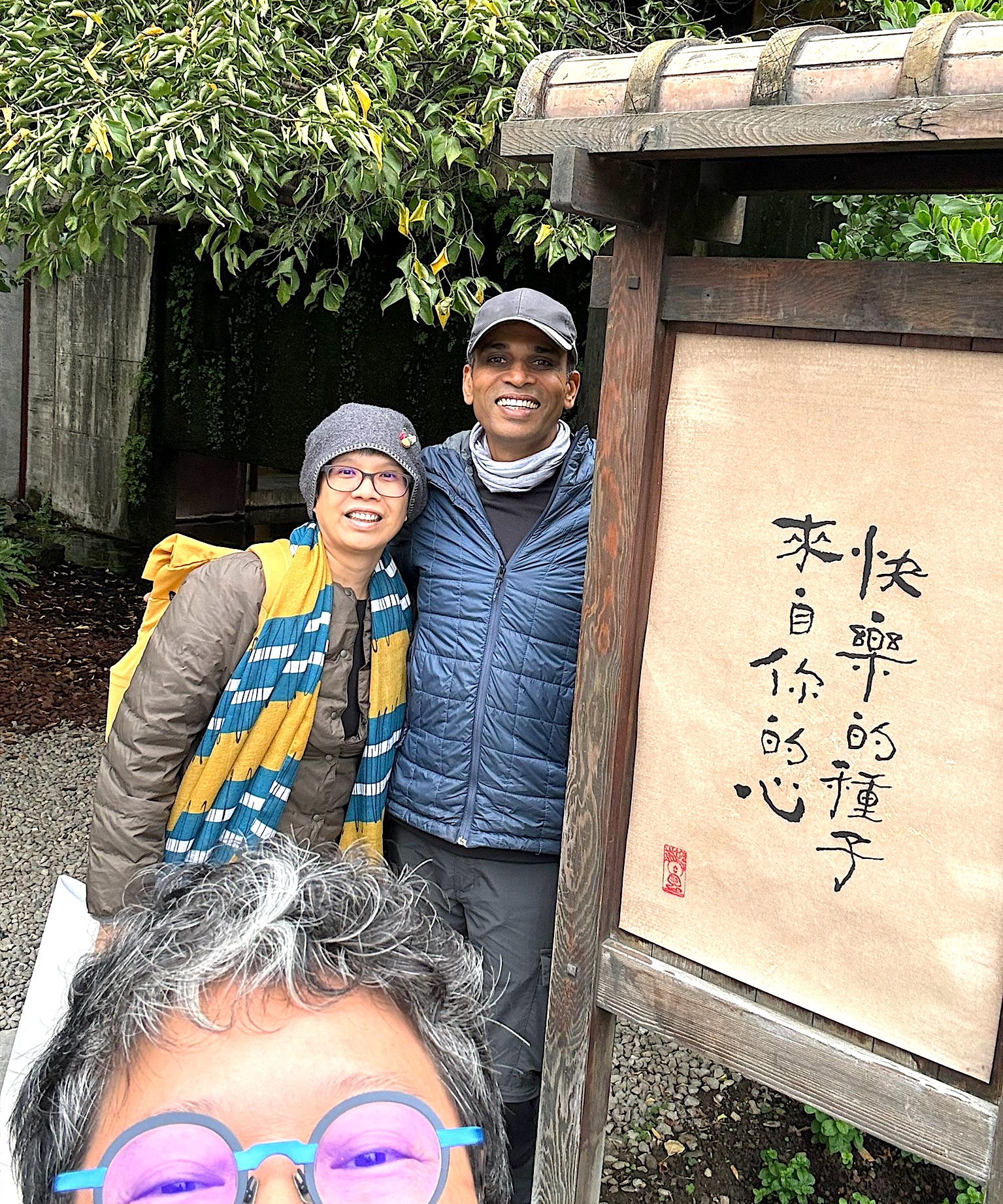
My friends Jayce and Crystal invited me to visit a temple in Taichung, Taiwan. I was excited to see the statue of Buddha and hear the Sanskrit chants. After receiving blessings in the main temple room, my friends walked upstairs and showed me another room where people were sitting in silence and writing something at their desks. They told me that it is a meditative writing practice where they copy the Heart Sutra in traditional Chinese. They asked me if I would like to experience that, and I spontaneously agreed.
We entered the room and sat at a desk. It had one blank sheet and a laminated sheet with the Heart Sutra in Traditional Chinese. Jayce and Crystal picked up a calligraphy pen and started writing.
Looking at the full page with so many columns, I felt an overwhelming sense of regret— “Why had I agreed to do this crazy job?”

I couldn’t understand a word, and each of those Chinese characters stared at me like immovable guards of a temple. Sadly, I knew that by merely staring at them, they would neither translate nor transport themselves on my paper. So, I began copying the script from the right side of the page to the left and from the top of the column to the bottom.
It felt like driving on the other side of the road in a foreign country. My sweaty hands made my pen slip away, and the desk was too low for my long legs. It took me forever to get through the first column. I glanced to my left. Jayce was already on her fourth column. By the time I reached my fourth column, Crystal had finished her sheet. She performed a meditative ritual and left the room. Jayce was also moving quickly toward the finish line while I faced an entire empty field in front of me. I couldn’t entertain the thought of quitting halfway. I have been a marathon runner, and finishing is the most important value. But what do you do when the terrain, the run, and the running gear are completely new?
“Or are they?” I wondered as I gazed at the statue of Buddha in front of me.
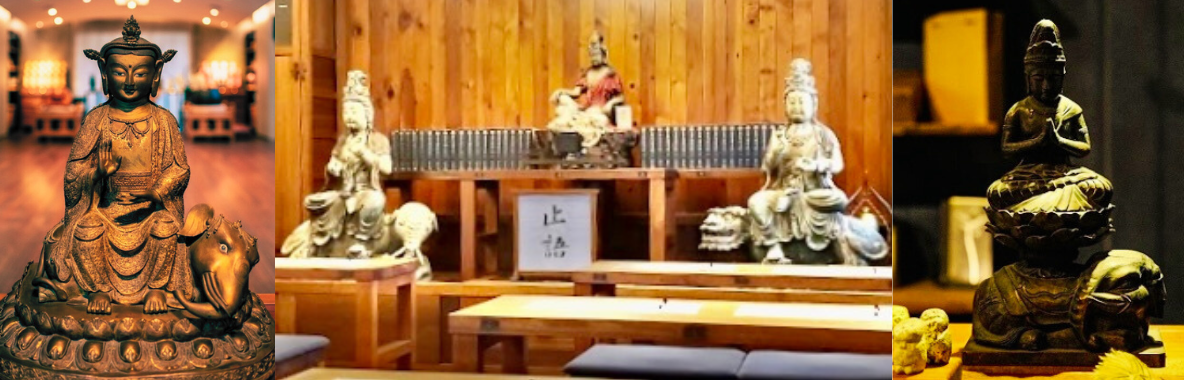
The familiar chant of “Buddham Sharanam Gachchhami” was still playing in some remote corner of my head. I closed my eyes and made a resolution. “It doesn’t matter what I am writing and why I am writing. Let me commit to this experience fully. Let me surrender.”
This brought some concentration and awareness to the script. Slowly, my attention became focused on the page, my pen, and my hand. I started noticing the characters more closely. I even developed my own relationship with each character. I started calling them windows, trees, loops, mountains, or rivers. The moment a familiar character would come again, I would feel joy. Slowly, I started enjoying the process without understanding the meaning. By the time I reached halfway, Jayce had completed her script and left. Now, I was all by myself.
As my comfort with the script and the characters developed, I started contemplating about the Sutra itself. I recalled that I was writing the Heart Sutra. I may not know each character or line, but on the whole, they carry a deep meaning of opening our hearts to each other and humanity. This realization shifted my relationship with the script. I felt a deep sense of reverence for what was flowing through my pen on the paper. I started praying while writing, seeking healing and happiness for all my family members and community.
Then, almost suddenly, silence fell. My pen moved across the paper, but I had no thoughts. I could simultaneously feel my entire body, the table, the room, and the little black being that moved between my thumb and fingers. It danced on the white plane, making shapes as it hopped to a new space. It felt effortless.
After a while, an overwhelming sense of gratitude filled my heart. I felt the deep longing of humanity to express, to communicate, to love, to write. I realized that each character I was writing had been crafted countless times by generations before me. It has been perfected as an art to embody the stream of our collective consciousness. It’s the same consciousness that has been expressed in so many scripts, languages, voices, words, and gestures around the world. I hoped that my care and love for each character I wrote would unlock that consciousness and bless me and my family.
At that moment, I remembered that my family in India worshiped pen. We are Kayasths. My ancestors were scribes, writers, and artists who discovered the power of pen and writing to tell the story of humanity. I gently bowed my head to acknowledge all of them. I could feel their presence around me— my parents, my ancestors, my teachers, and among them, Buddha himself. Their craft of writing and their wisdom of heart flowed through me on this paper. It doesn’t matter if I understood any word or not; I was living its essence.
With each stroke, I prayed for healing and happiness for all the people on this planet. The paper was full of beautiful characters who were no longer foreign but embodied a very personal expression. They were a courageous testimony of universal love and a humble prayer for well-being.
I let my pen rest and sat in stillness, looking at my desk. The Heart Sutra had found its way onto my blank paper through my heart, transforming me in the process.
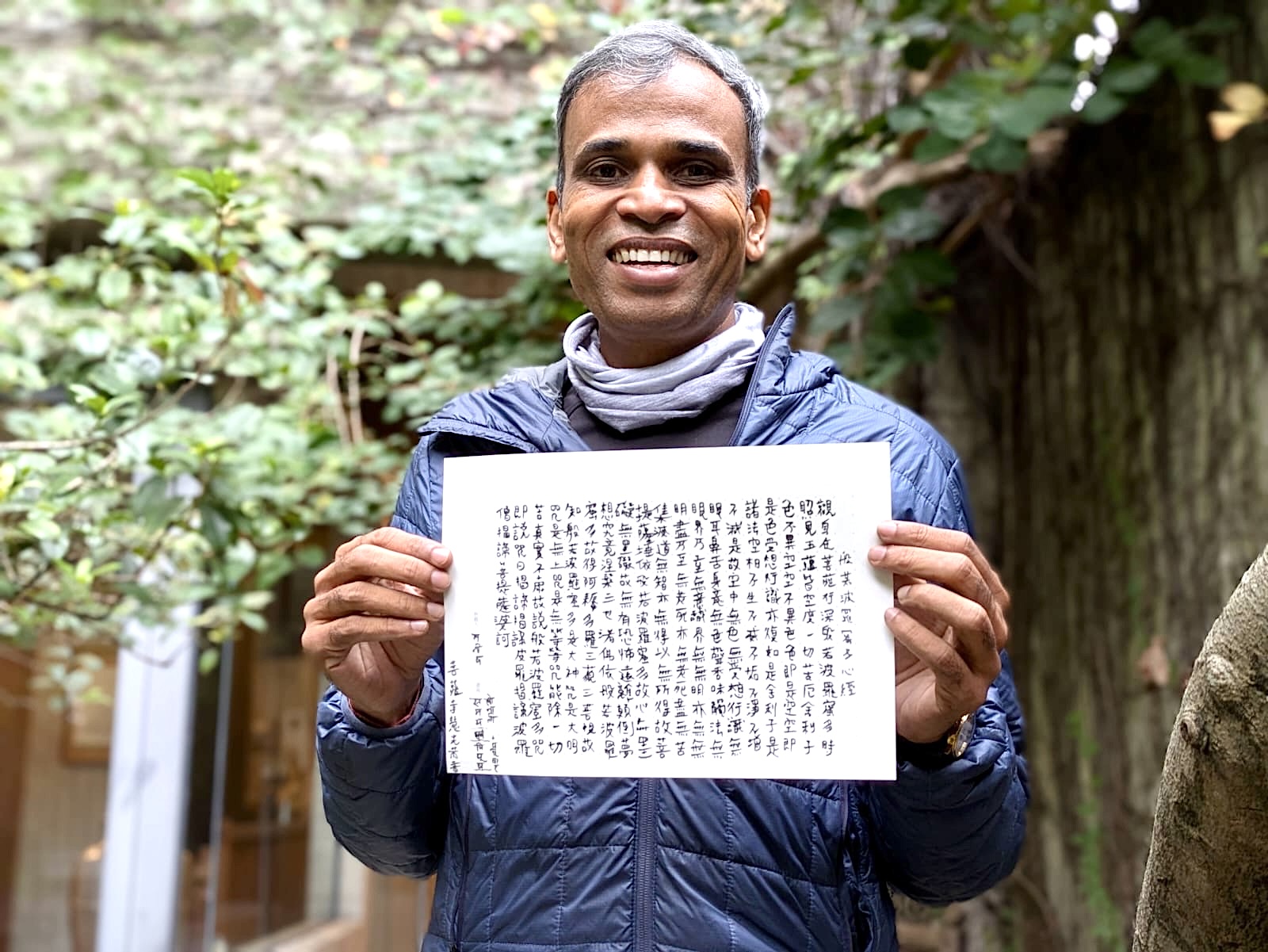
I felt fortunate to unlock a mystical pathway hidden in an unexpected, uncharted field. When my cognitive mind was challenged by a foreign script, I had to let my heart-knowing guide me to the very essence of the heart sutra. This experience taught me that “at the heart of all our expressions, there lies a deep human longing for love.”
Paradoxically, it reminded me of the news I read that morning about the escalating conflict at the Gaza Strip. I wondered: don’t all conflicts emerge from our failure to understand others’ perspectives? Moments when we are baffled and refuse to engage further? Perhaps this contemplative writing practice offers an alternative pathway—one that invites us to stay a little longer in the face of discomfort, make friends with the unfamiliar “other,” contemplate the wisdom they are here to teach us, embrace the silence of the unknown, and reconnect us with the source of humanity—our deep longing to love!
Perhaps all our baffling "foreign" encounters are divine invitations to discover an alternate pathway to the source of universal consciousness.
As I stepped out of the room, I found my friends waiting for me. It had taken almost an hour. I’m grateful to Jayce and Crystal for the invitation. Their script taught me how to find my heart.
— Manish Srivastava, Sacred Well
 the sacred well