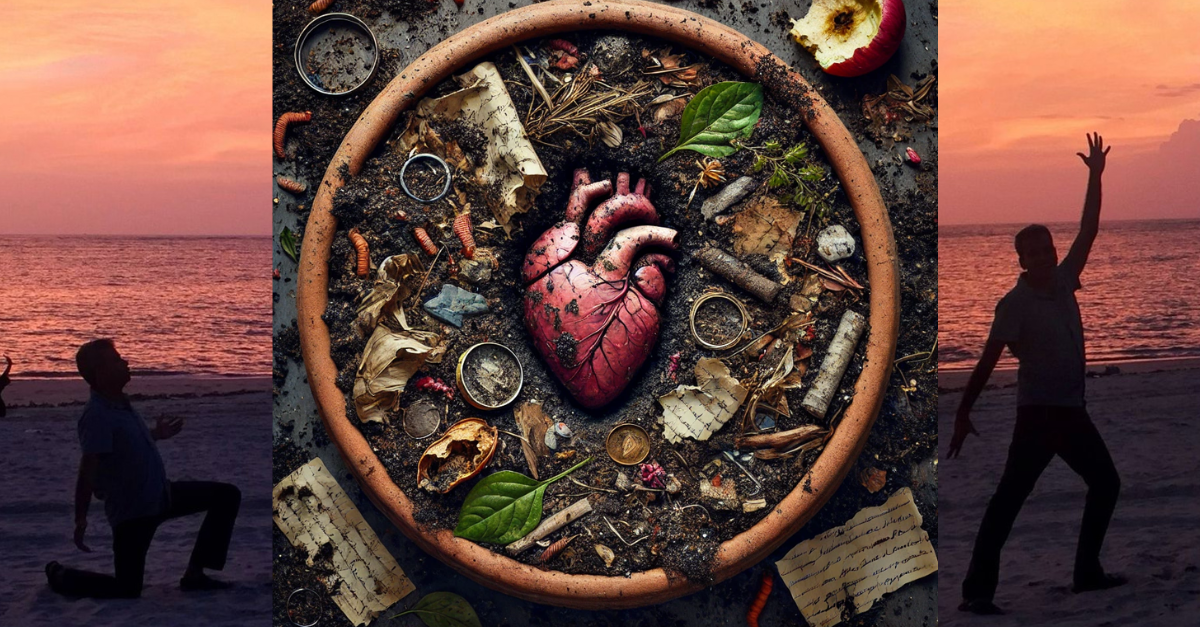
What if all our unhealed wounds, unresolved conflicts, unexpressed conversations, and unlived dreams are the ingredients for a new life to be born within our hearts?
In many places around the world, the Earth is getting ready to step into spring. Our seeds of inspiration and hope require fertile soil to spring into life. Perhaps it’s a good time to prepare the soil of your heart by drawing some lessons from composting.
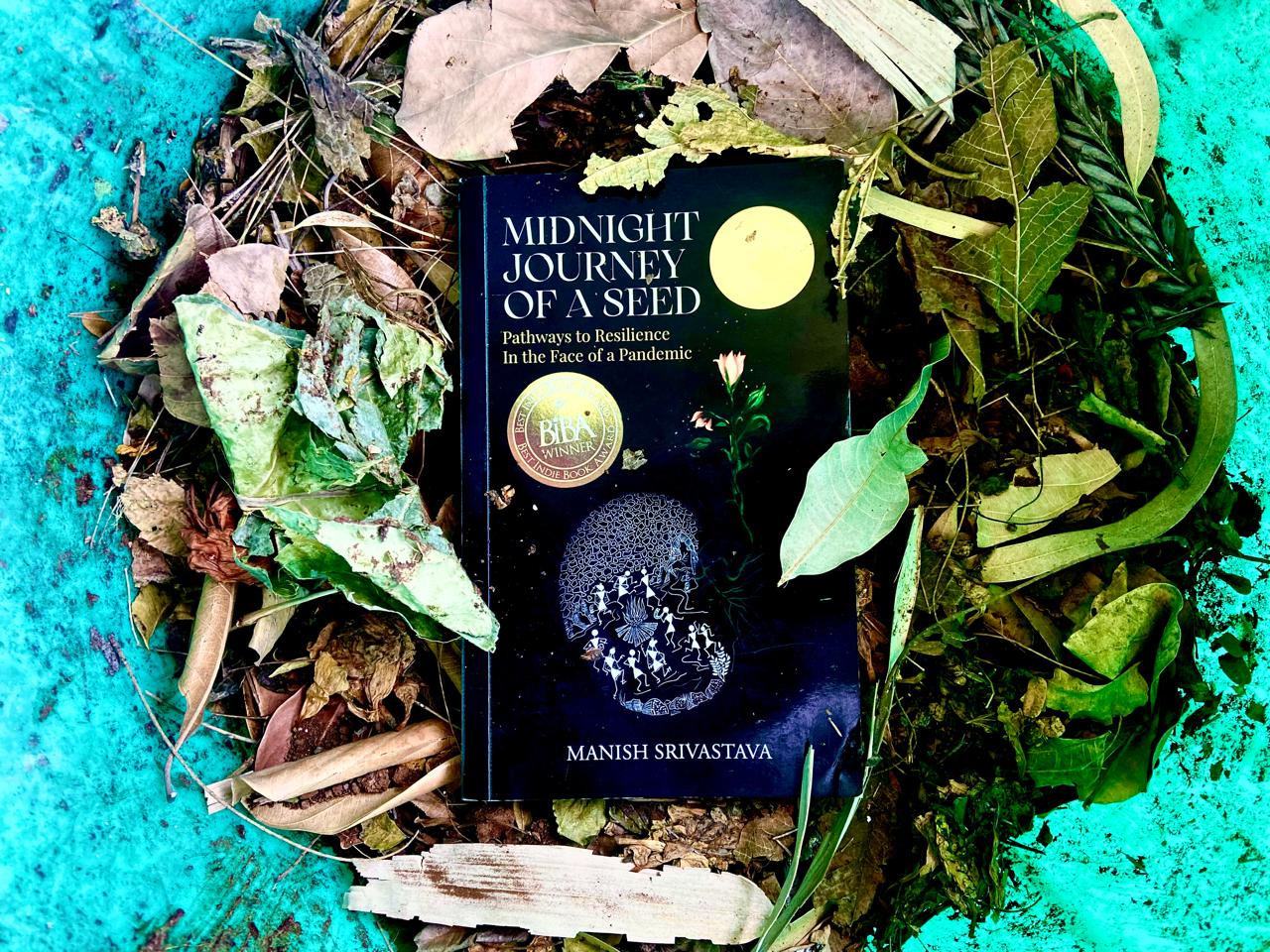
I had a powerful learning experience during the pandemic and wrote about it in my book Midnight Journey of a Seed: Pathway to Resilience in the Face of a Challenge. I would like to offer that reflection here, along with a few embodiment and art practices that may help you cultivate your heart for a brand-new season of spring
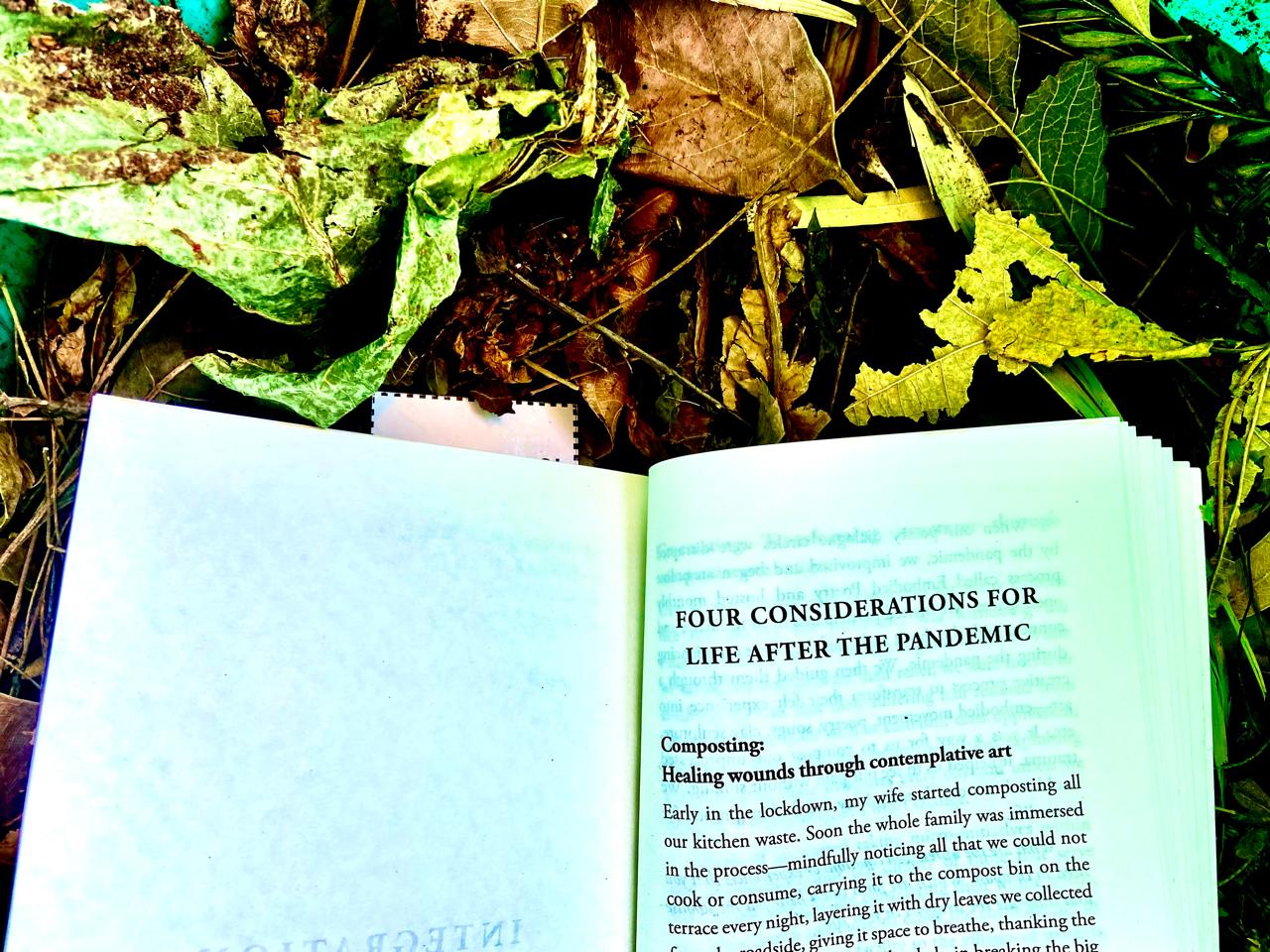
Early in the lockdown, my wife, Sonali Gera, started composting all our kitchen waste. Soon, the whole family was immersed in the process—mindfully noticing what we couldn’t cook or consume, carrying it to the compost bin on the terrace each night, layering it with dry leaves we collected from the roadside, giving it space to breathe, thanking the tiny insects and earthworms for breaking down the big stuff, mixing it often so that the leftover scraps integrated into newly formed soil, and finally, using the compost to nurture new life.
In a way, the pandemic—and all our life struggles—need a lot of composting.
All those emotions that were too intense to deal with, all those experiences that have not been processed, need to be seen, mixed, metabolized, integrated, and transformed into fertile ground for new life to spring forth.
But composting human trauma is not so easy. It’s natural for the mind to let pain sink to the basement of our psyche, leading to unprocessed fear and fragmentation.
Embodiment and Art Practices for Emotional Composting
Like composting, emotional transformation happens in cycles. We cannot force the process, but we can create the right conditions for integration. Embodiment and creative expression allow emotions to be felt, moved, and transformed—without needing to be explained or fixed.
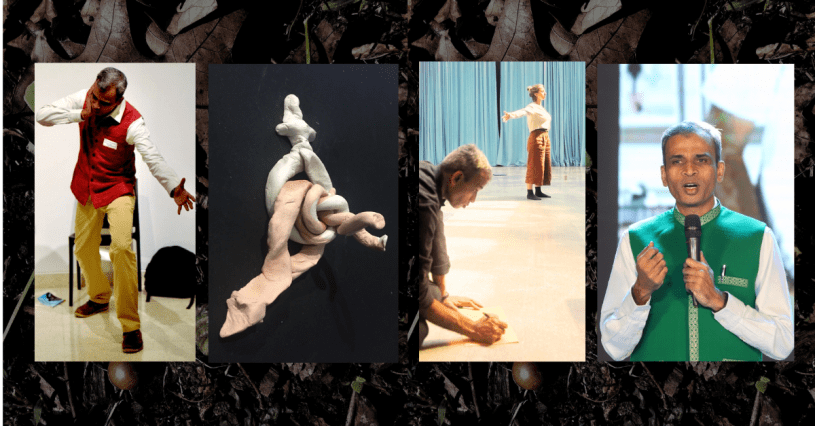
When our poetry dialogue circles were disrupted by the pandemic, we improvised and began an online process called Embodied Social Poetry and hosted monthly open spaces. We invited participants to sit in silence and connect with the shock and grief they were experiencing during the pandemic. We then guided them through a creative process to transform their felt experience into art—embodied movement, poetry, songs, clay sculpture, etc. It was a way for us to compost our unprocessed trauma. It helped us to see our pain without sinking. We could embrace our shared misery and find inspiration for a new life.
What are the unresolved emotions or experiences that you need to compost? Which art form could help you metabolize and integrate the struggles in your life?
Below are some practices to help you compost the raw material of your emotions into nourishment for new growth.
1. Embodiment: Letting the Body Speak
The body holds our stories long before we find words for them. Embodied movement helps us process emotions that feel stuck or overwhelming.
Try this simple practice:
- Sit in stillness. Close or lower your eyes and bring attention to your breath. Feel the ground beneath your feet, the sky above you, and your back supported by all those who have held you—parents, teachers, ancestors.
- Tune into your heart. Bring awareness to a challenge you are currently facing. Notice how your body responds. Does your breath change? Do certain areas tense up or feel heavy?
- Let your body find a shape or gesture that expresses this challenge. It could be a feeling of being pressed down, pulled apart, or held back.
- Hold the shape for a moment. Then, allow it to move on its own. Trust the body’s wisdom—when we allow movement, new possibilities emerge.
- When the movement settles, notice what shape or posture your body naturally comes to rest in. Ask: What does this shape say about my journey?
- Finally, sit for a moment, letting the experience integrate. If you wish, translate it into another form—drawing, writing, or simply noting a word or phrase.
2. Writing: Telling Your Story in a New Way
Writing allows us to witness our emotions from a slight distance, giving them space to shift. You might try:
- A letter to your wounded self—offering care, understanding, and reassurance.
- A short story—where you are the protagonist, navigating change. Try writing in the third person to gain perspective.
- Dialogue writing—imagine speaking to the challenge itself, or to a wise guide. What responses emerge?
- Poetry—let words arise without overthinking. Sometimes, rhythm and metaphor express what logic cannot.
3. Dance and Music: Moving with the Emotion
Music and movement allow emotions to move freely without needing interpretation.
- Play a song that resonates with your mood and allow your body to move instinctively.
- If you play an instrument, let your hands explore the sounds your heart wants to express.
- Try humming or singing a simple tune, even if it’s just a few notes. Follow the sound and see where it leads.
4. Visual Art: Giving Form to the Unseen
Visual art externalizes emotions, making them tangible. You don’t need to be a trained artist—just let your hands move freely.
- Painting or doodling—pick colors that match your emotions and allow the brush to move spontaneously.
- Clay or sculpture—work with natural materials, shaping them as a way of reshaping inner struggles.
- Nature-based art—gather leaves, stones, or flowers and arrange them intuitively on a cloth or surface. Let them tell their own story.
Honoring the Process
Whatever form you choose, let your emotions flow without judgment. Be gentle with yourself. Before beginning, do a mindfulness or grounding practice to find your inner resources. Move at your own pace. Stop when your body feels done.
Once complete, sit in stillness. Let the body integrate the artistic journey you just took. You might take a short nap, go for a walk in nature, or simply breathe deeply before returning to your daily life.
Art has a way of reconnecting us with our natural flow, integrating the unexpressed and unexplored aspects of our being. In other words, it provides the organic matter that composts the leftover emotions and transforms struggles into rich, fertile soil—on which new life can take birth.
— Manish Srivastava, Coach, Facilitator, Poet and Recipient of Creative Art Therapy Award

- This article/ idea was first published in the book Midnight Journey of a Seed: Pathway to Resilience in the Face of a Challenge. If you wish to read the entire pathway for cultivating resilience with other similar practices, the book is available on Amazon- https://amzn.in/d/2AvhwHQ
- Follow www.sacredwell.in for more articles and insights on how art can transform our heart and generate well-being for all.
 the sacred well