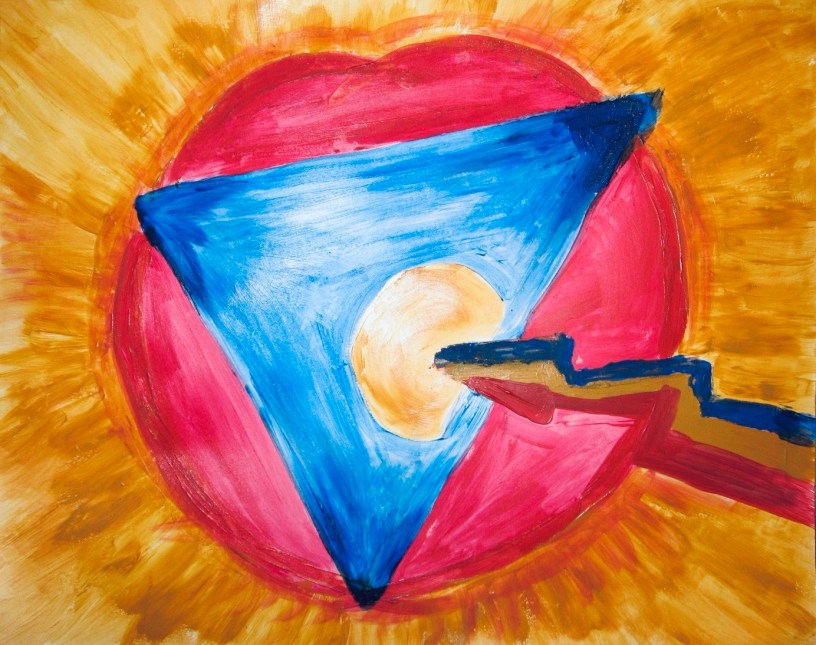

When you are thirsty and reach the banks of an ever-flowing river, all you can do is bow down, cup your hands, and carry some of its fresh water to your parched lips. You can drink as much as you like and sit by the river, taking in its timeless beauty. Yet the river never stops — always moving, always present — ready to quench your thirst, answer your questions, dissolve your fragmented frames, and bless your whole being.
Such has been my experience with the timeless teachings of the Indian spiritual traditions — I am a traveler resting by the banks of this inexhaustible source of wisdom, which continues to guide us toward wholeness even today.
I was born on the banks of this sacred river. It nourished my soul, blessed my life — yet, in the innocence of youth, I often took its gifts for granted. I wandered far, seeking answers across distant highlands, empty platitudes, and barren deserts, until one day, the river called to me — this time, from within the hidden chambers of my own heart. With the gentle guidance of friends and teachers, I found my way back, bowing once again at its familiar shores, carried now by deep humility and surrender.

The Call
When I first heard Thomas Hübl speak about the fundamental human needs of being, belonging, and becoming during a masterclass on collective trauma healing, his words resonated deeply. I could see how much of my own striving and struggle stemmed from these unmet essential needs. Yet, the more I tried to fulfill them through external, dualistic frameworks, the more I found myself trapped in an ego-driven cycle — seeking, achieving, yet feeling increasingly separate from the deeper whole. Eventually, burnout brought me to a point of surrender.
It was then that I turned inward and began reconnecting with the timeless wisdom of Indian spirituality. I realized that within these ego needs lies a deeper longing — a hidden doorway to spiritual transformation. The key lies in the Heart: the bridge that can alchemize ego-centered striving into spiritual and ecosystemic consciousness.
I am deeply grateful to my friend Dr. Samata Vasisht, who guided me toward this realization.
“My friend,” she said, gently turning a new page in my notebook, “now that you acknowledge that your thinking and striving have brought you to burnout, let me offer you a holistic perspective from Indian spirituality.”
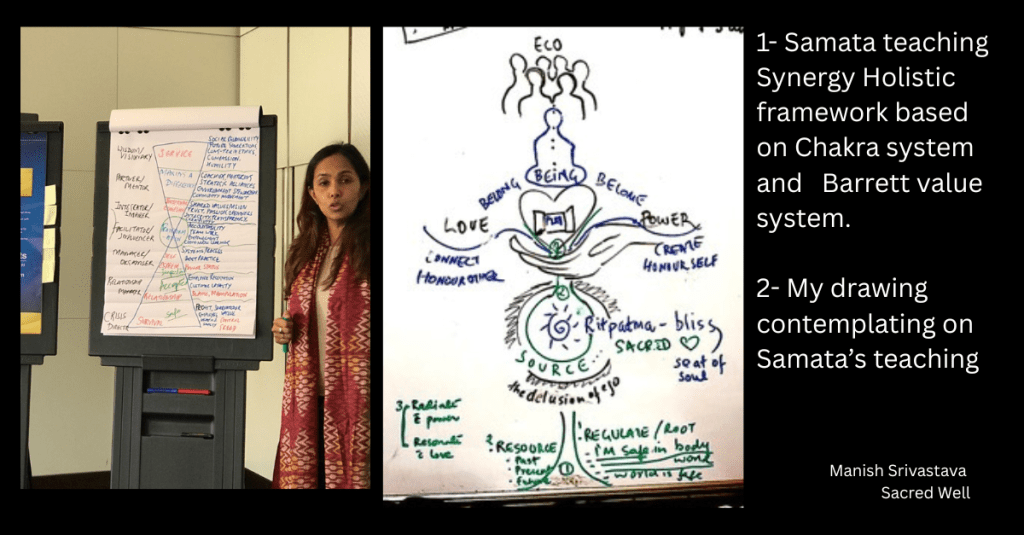
Samata — a healer, facilitator, and systems thinker — has a rare gift for weaving ancient wisdom from across the world into clear, accessible frameworks. That day, she introduced me to the Indian spiritual teachings on the Chakras in a way that initiated me on a new journey of inner transformation. While Samata’s eloquent and holistic wisdom will soon be published in upcoming books, I would like to recall some insights I gathered from her sharing on that beautiful afternoon.
The Path
At the heart of Samata’s work is the insight that “Being arises through the sacred calibration of two core energies: the feminine (Belonging) — to rest, receive, feel, and connect; and the masculine (Becoming) — to act, express, create, and move with purpose. These forces are not fixed or opposed, but dynamically dancing, like the Ida and Pingala, restoring balance through their interplay. When we lean too far into one, life redirects us — not as punishment, but as sacred autocorrect. Each disruption is a recalibration, guiding us back to coherence. In honoring this rhythmic dance, we align with our true Being.”
The first three chakras form the foundation of our journey in the material world, guiding us through the essential human experiences of being, belonging, and becoming.
- The Root Chakra (Muladhara) teaches being — feeling safe, grounded, and secure in who we are.
- The Sacral Chakra (Svadhisthana) cultivates belonging — the ability to form intimate relationships and emotional bonds.
- The Solar Plexus Chakra (Manipura) drives becoming — developing personal power, purpose, and the ability to serve the world through our talents.
Together, these chakras help us develop a strong, healthy ego — one that is capable of thriving socially, emotionally, and materially.
The Heart Chakra (Anahata) is the pivotal center where personal transformation begins. With a healthy ego established, the heart opens, shifting our focus from individual success to collective service. It is here that love expands beyond personal attachments to include compassion for all beings. The heart acts as a bridge, allowing us to cross from the world of “me” to the world of “we.”
The journey continues through the higher chakras, where the earlier themes of being, belonging, and becoming are mirrored — but now in service of the greater whole.
- The Throat Chakra (Vishuddha) empowers becoming once again — but now as finding and expressing our unique voice in service to the ecosystem of life.
- The Third Eye Chakra (Ajna) refines belonging — seeing and sensing our deep interconnectedness with all beings.
- The Crown Chakra (Sahasrara) fulfills being on a cosmic scale — dissolving the small self into universal oneness.
Each chakra pair reflects this deeper evolution: Root (1) connects to Crown (7), Sacral (2) to Third Eye (6), Solar Plexus (3) to Throat (5), with the Heart (4) as the sacred turning point between them.
Our spiritual journey is a sacred spiral that honors our fundamental human needs — being, belonging, and becoming — first at the personal level, then at the universal level. I could also see the sacred dance between the feminine or Shakti (belonging) and masculine or shiva (becoming) to bring me into my presence (being). In understanding and embodying this ancient chakra wisdom, we discover not only how to heal and empower ourselves, but also how to serve and belong to the greater web of life.
The Detour
Like many Indians of my generation, I went westward in search of practical answers to my spiritual dilemmas. While this journey deepened my scientific inquiry, the dualistic, fragmented approach I encountered kept the holistic nature of life elusive.
I remember grappling deeply during a research scholarship at Harvard, when a professor urged me to set aside my intuitive sense of the interconnectedness of phenomena. His view reflected the strict framework of falsification in Western science — where truth is tethered to what can be measured, tested, and potentially disproven. Yet I found myself questioning: what if our consciousness has not yet evolved the sensitivity to perceive the more subtle dimensions of reality? Must the unseen be dismissed as untrue simply because our instruments — mental or material — have not yet caught up?
My friend Samata helped me understand that much of Western management and industrial knowledge systems are organized around the lower three chakras, focusing on the individualistic needs of being, becoming, and belonging — that is, ego-consciousness. While some systems long for ecosystemic impact and advocate for a journey from ego to eco, they often struggle to fully transcend dualistic self-reference, unable to see and sense the self as universal consciousness.
I realized that despite being Indian, I too grappled with the same dichotomy. Within me, two streams of consciousness flow. One perceives the self as separate from the universe and strives for a unique identity — seeking to be, to belong, and to become the best version of myself within the social world.
The other, more subtle stream knows intuitively that I am not merely a beloved wave in the river of universal consciousness — I am the river itself and this body and this life are but a fleeting awareness of that boundless consciousness.
For me, this truth sometimes reveals itself — during meditation, rituals, ancestral stories, poetry, or small daily moments when both the sense of personal significance and the illusion of separation dissolve into sacred oneness.
I believe we all, at some level, struggle between these two parts: striving (from ego identity) and surrendering (to eco consciousness).
This inner dichotomy became even clearer when I listened to a podcast by Joseph Campbell, in which he explained the Indian chakra system and compared it to various Western spiritual traditions. Campbell suggested that Western consciousness clings to the need for a divine “Other,” whereas the seventh chakra invites us to relinquish the “Other” altogether — to realize that we were never separate.
In his words: “At the top chakra, there is no more idea of a person. And we in the West are committed to the notion of a personal God. We can’t go past that… At the highest chakra, you leave the field of the personal altogether and enter into the field of pure being. That’s beyond the Western horizon.” He further observed: “In the Western system, to say ‘I and the Father are One’ — as Christ said — was blasphemy. And he was crucified for it.”
No wonder that when I co-facilitate awareness-based workshops in the Western world, participants and even co-facilitators trained in Western paradigms often frame spiritual, ecosystemic awareness practices using layers of scientific data — striving, perhaps, to give themselves permission to name and own their higher consciousness. Whereas in India, we “get it.” Even though we have all been trained in Western languages and philosophy, something deep within us remembers and feels the truth: I am the Universe (Aham Brahmasmi).
Hearing Campbell helped me cultivate deeper compassion for my friends from Western traditions — and for Indians, like me, who are trained in Western philosophical paradigms. I remember a European colleague who had a vivid experience of dissolving into the collective consciousness. He was speechless, struggling for days to accept and articulate what had happened. He was possibly entering a deeper realm of knowing that had previously been unfamiliar.
The only difference I carry, being Indian, is that when my ego-world collapses, I can return to the river of universal consciousness. Ancient frameworks provide a field where I can choose many pathways to accept, embody, and trust the universal consciousness radiating through every being.
It was a similar ego-world collapse that quietly led me to burnout. I needed to return — to my body, to my land, and to my native wisdom. Illness facilitated that return. For months, I could not travel. I lay humbly in the company of my fragile body, contemplating life and its deeper wisdom.
As I reflected on the insights Samata had shared with me about the Indian chakra system, something began to stir within. I started realizing how deeply these insights resonated with many streams of Indian spirituality that live unconsciously within me — in the form of stories, practices, rituals, myths, and symbols.I began to see how these ancient streams had gently nourished me and shaped how I show up in life.
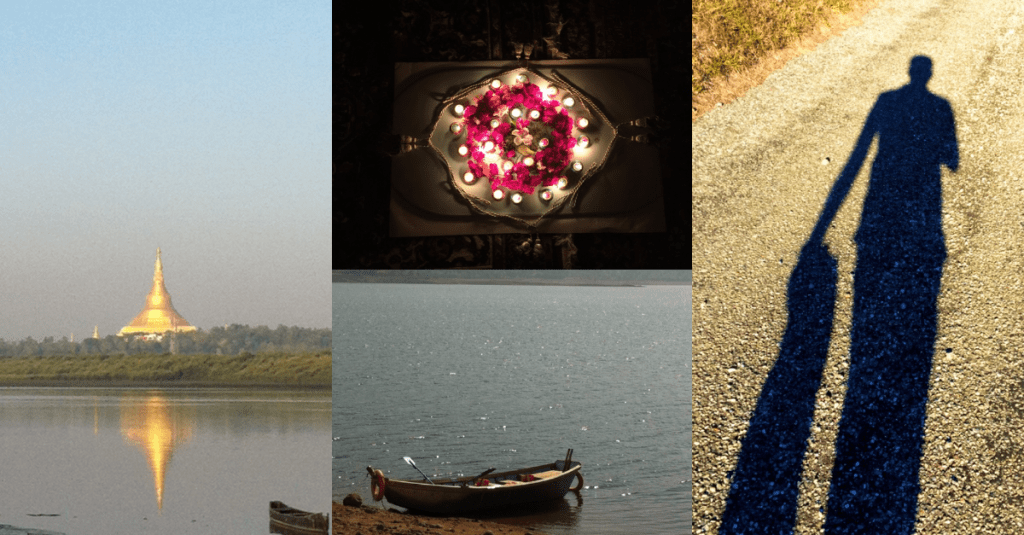
There is a difference between living the great mythical wisdom of life unknowingly and embracing it consciously. It felt as if a hidden reservoir of embodied wisdom was being activated in my heart.
This article is an effort to make sense of that awakening — a work in progress that I will continue to unfold and deepen over time.
As these streams of wisdom became increasingly visible, I realized how they directly address three fundamental human needs: being, belonging, and becoming.
Returning to the Sacred Well
Near my ancestral village, Ishwarwara, lies a sacred well known as Namish Chakrateerth. It is believed to hold an inexhaustible source of water, wisdom, and wellness. This well has nourished a sacred forest, offering sanctuary to sages, poets, seekers, and storytellers across generations. From its stillness, the great Indian scriptures—the Mahabharata, the Puranas, the Vedas, and the Upanishads—are said to have been born.
I believe there is a sacred well in every heart—an inner source of timeless wisdom, where we remember how to be, belong, and become one with the universe.
Just as a well offers a portal into the deep, unseen rivers beneath the earth, may these contemplations open a portal for you—to begin your own journey inward.
Being
Vedanta, along with other sacred Indian texts, foregrounds the core principle of realizing our spiritual essence as Ātman — the undivided, pure, non-dual presence beneath all apparent social roles, differences, and identities. This reflection of the supreme being within us is our truest nature. It is often manifested as our deep longing to be acknowledged for who we are, without any labels or conditions. When this core presence is seen, felt, and honored, we experience a profound sense of safety and acceptance.
Children are instinctively aware of this pure being within themselves and others — they long for an environment where they are simply allowed to be. As adults, this longing persists at a very fundamental level. Whenever we enter new spaces or relationships, we still yearn for this simple acknowledgment: to be seen, to be held in presence without judgment. This is the beginning of our spiritual journey.
In Indian spiritual traditions, this presence is consciously acknowledged and honored. In gestures like Namaste, we recognize the divine in the other. In sacred chants like Buddham Sharanam Gachchhāmi (I surrender to the Buddha, the awakened one within and without), we surrender to the awakened being present in all. Similarly, teachings from texts like the Upanishads remind us: Tat Tvam Asi — “Thou art That.”
In the chakra system, the journey from the Root Chakra (Muladhara) to the Crown Chakra (Sahasrara) teaches us that true safety is not found only in external security, but in the inner realization of our oneness with all existence.
The difference between these two realms can be seen in how the pursuit of safety and protection for oneself (one’s tribe, country, faith, or race) creates more wars, violence, and divisions in the world. The universal consciousness is calling us to transform our ego beings into deep awareness or realisation of oneness with all existence. And that is the call for the collective spiritual journey.
Belonging
Whenever our inner being is fully acknowledged, we feel safe and accepted, and from there, our longing to connect, relate, and belong naturally unfolds. At a physical level, this manifests as the need for relationships and intimacy and becomes the basis for all social bonds.
However, at a deeper spiritual level, this longing is for sacred community — for Sangha. In some Indian traditions, this is beautifully expressed in the concept of Vasudhaiva Kutumbakam — the whole world is my family. This vision recognizes the sacred interconnectedness of all life.
Children naturally feel this interconnectedness—a deep kinship with their families, other children, animals, plants, and the earth itself. As we grow, we learn separation—an important part of individuation. Yet at a certain stage, as our higher chakras begin to activate, we regain the conscious capacity to sense this deep interconnectedness—to belong not just to a tribe but to the whole. This is also referred to as the opening of the Third Eye that instantly dissolves all dichotomies and separations
Many adults today are in this powerful transition, longing not just for personal belonging, but for conscious, planetary belonging. Sacred vows like Sangham Sharanam Gachchhāmi (I take refuge in the Sangha) affirm the importance of community on the path. The Rigveda too sings of unity:
“Let us move together, let us sing together, let us come to know our minds together.”
Through the dance between the Sacral Chakra (Svadhisthana) and the Third Eye Chakra (Ajna), we learn to transcend personal attachments and expand into the vision of universal kinship with all beings.
Becoming
Within each individual, there is a deep longing to manifest our fullest potential. We see this so clearly in children — their natural impulse to explore, express, expand, and live their essence fully.
Initially, this longing manifests in the physical and social world as personal growth, and sometimes becomes confused with professional success, power, and accomplishment. But power and position are mere instruments, not the end goal.
Spiritually, the deep longing for becoming is understood through Swadharma — one’s unique calling in service of the whole. Vikrant Singh Tomar, in his podcast on Karma Yoga & Bhagavad Gita, shared that Swadharma is the alignment of our innate nature (Prakriti or Gun dharma), our social role and responsibilities (Vishesh dharma), and our higher purpose for the well-being of all life (Samanya dharma). When this happens, our soul, role, and whole align. Our actions flow without attachment to outcome — this is Nishkama Karma. Our doing becomes a sacred offering.
When we align to the nature within — our Swadharma — and the nature without — the universal law of cause and effect — we align deeply with the cosmos. This, I believe, is the essence of the sacred chant: Dhamam Sharanam Gachchhāmi — I surrender to the Dharma, the universal law that upholds all life.
This is also beautifully embodied in the concept of Seva (selfless service) and the movement from Artha (pursuit of wealth and security) to Moksha (liberation). The Gita, the Yoga Sutras, and the teachings of great masters like Sri Aurobindo point us toward this flowering of true becoming.
The pairing of the Solar Plexus Chakra (Manipura) and the Throat Chakra (Vishuddha) guides us to evolve from personal ambition to authentic self-expression that serves the well-being of the larger living system.

Integrating these insights into my life began to support my well-being. I became more attuned to my need to feel safe, accepted, and seen; to connect, relate, and belong; and to strive, create, and offer my unique contribution to the world.
As a parent, coach, and facilitator, this wisdom shaped how I create spaces for others: spaces where people can be, belong, and become the best version of themselves.
However this contemplation over last few year has also helped me realize that the journey has a higher dimension— where our need to be safe and accepted transcends ego-stuckness and we rest in awareness of the whole; our need for relationships expands into sacred kinship with all of existence; and our personal ambition for growth transforms into authentic self-expression in service to the whole.
When that alignment occurs, the journey becomes effortless. We’re no longer striving to be, belong, or become — we begin to surrender and flow with the Field that simply is. Our struggles don’t disappear, but we meet them differently, integrating them as the ocean absorbs all tides into its continuous, seamless beauty. Yet the question remains: how do we truly transform from striving to surrendering?
The key to this transformation lies in the heart chakra — Anahata.
The Heart Chakra: our Inner Alchemist
The heart chakra, or Anahata, meaning “unstruck,” or the sacred space where duality transforms without striking or conflicting. It is the fourth energy center, located in the center of the chest. It acts as the sacred bridge between the lower three chakras — concerned with survival, desire, and personal power — and the upper three chakras, which relate to swadharma, intuition, and spiritual connection. Without an open heart, we either get trapped in material survival or disconnected from embodied spirituality. Anahata transforms “me” into “we,” allowing love, compassion, forgiveness, and empathy to flow freely.
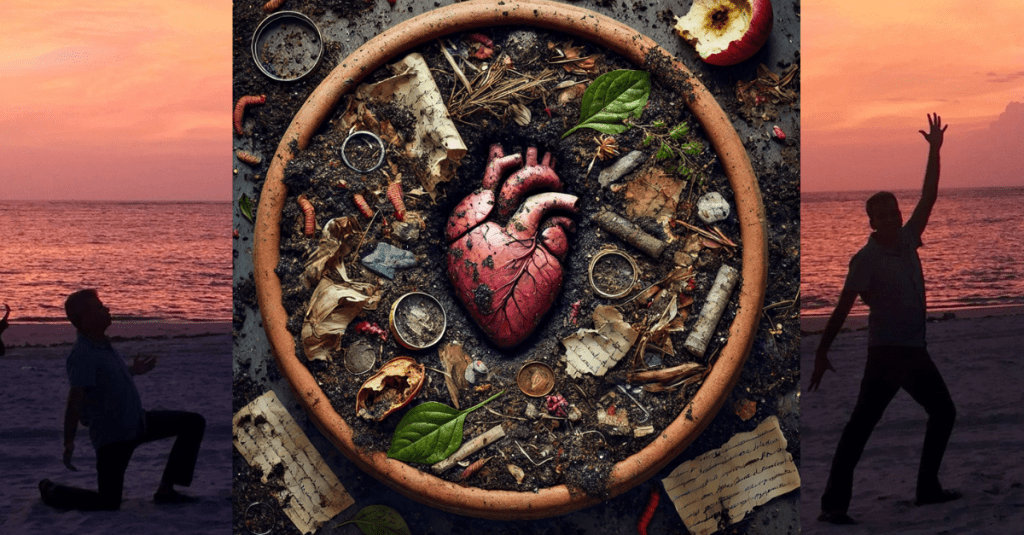
It is a sacred well where inner alchemy takes place and wounds are transformed into deep compassion. It is a place where all that’s unresolved is healed, forgiven, and renewed. Our physical burnout, our heartbreaks, and our disillusionment with worldly affairs are a perfect invitation to enter into the sacred well of the heart Chakra. All these are indicators that we are striving way too much with the lower three chakras, and life is inviting us to heal and surrender.
To cultivate the heart chakra, practices like self-love, forgiveness, gratitude, breathwork, loving-kindness meditation, connection with nature, acts of service, heart-opening yoga asanas, can be powerful. Personally, for me, poetry, art, contemplative, theatre, mindfulness, and spending time in nature, help me heal my wounds and transform them into a work of art. Every time I enter into the sacred well of heart chakra, I come out with a shift in my perception, deeper sense of purpose, and my identity dissolves a little more to embrace the universal river of which I am a momentary ripple.
Ultimately, an awakened heart chakra brings a balance of strength and softness, rooting our human experiences in love while lifting our spirit toward the divine. However, it’s an ongoing journey.
I realize now that the ego journey (self-development) and the ecosystem journey (service to all life) must unfold together. If we take a spiritual or ecosystem journey without cultivating a healthy ego and grounding in the body, we risk spiritual bypassing — seeking transcendence without integration. We see this when spiritual teachers fall into traps of power, sexuality, or money because their lower chakras were not fully healed.
Yet, delaying the spiritual journey entirely until “later”—after living a fully materialistic life—is another trap. Many say, “I will give back to society after retirement.”
The true journey is the middle path that Buddha spoke of. The Heart Chakra offers the pathway. Transformation is not linear; it is inside-out and spiraling. The needs of being, belonging, and becoming happen simultaneously, across both the ego and ecosystem dimensions.
The invitation is to continually return to the Heart: to notice: What is it that I am truly in service of? To care for one’s safety, relationships, and power in the earthly, manifest world. And simultaneously cultivate the capacity to serve the larger sacred whole.
It is not either-or. It is not first this and then that.
It is a simultaneous sacred dance.
When we walk too deeply into the ego-driven world, we return to the Heart and remember the spiritual longing. When we float too far into the spiritual world, we return to the Heart and ground ourselves in real, embodied life.
I guess this has been my path — sometimes confusing, but now gradually confluencing.
And so, dear friends and fellow travelers, I invite you to explore:
How do we activate our Heart Chakra in the real world?
— Manish Srivastava, Sacred Well
A humble acknowledgement:
The depth and breadth of Indian spiritual wisdom are immeasurable. It is impossible for me to capture and summarise all that in one article. Although the same source tells me that the river is fully present in the few drops of water that I hold in my hand. It inspires me to write and share some of the insights that emerged from my conversations with my friends, teachers, and contemplation over the last few years. I’m sure there may be many students and masters who can contribute more to this topic. I invite them all to write to me personally and help me learn and integrate more.
Some resources—
- Dr. Samata Vashisht https://www.linkedin.com/in/samatasynergyholistic/
- Synergy Holistic— a wholeness collaborative founded by Samata Vashisht envisioning ‘Collective Flourishing – Samasta Loka Sukhino Bhavantu’ by evolving consciousness and uncovering the wholeness within each of us. Her foundational view is simple yet profound that life is an intelligent self-organizing field constantly guiding us towards self-actualisation in service of the whole https://synergyholistic.world
- Upanishads and the concept of Ātman— https://www.britannica.com/topic/Upanishad
- Bhagavad Gita on Swadharma and Nishkama Karma — https://www.holy-bhagavad-gita.org/chapter/18/verse/45
- Vasudhaiva Kutumbakam – Mahopanishad https://www.india.com/webstories/news/vasudhaiva-kutumbakam-origin-meaning-and-significance-7039836/
- Chakra System and Heart Chakra (Anahata) https://www.yogapedia.com/definition/4962/anahata-chakra
- Joseph Campbell- https://podcasts.apple.com/us/podcast/pathways-with-joseph-campbell/id1553326065
- Thomas Hubl on Being, Becoming and Belonging- https://podcasts.apple.com/us/podcast/581-being-becoming-and-belonging-with-thomas-h%C3%BCbl/id1409479503?i=1000659606455
- Work of Richard Barrett on values deeply rooted in the wisdom of chakras has inspired Dr Samata’s work. https://www.barrettacademy.com/about-richard
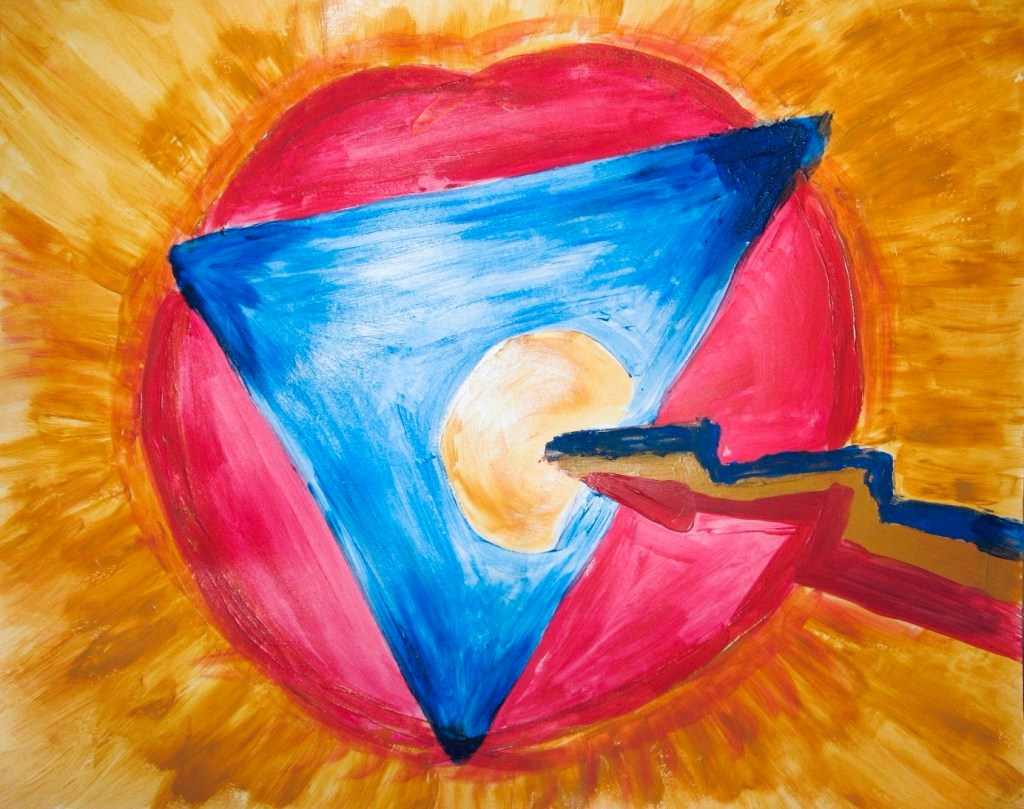
 the sacred well